
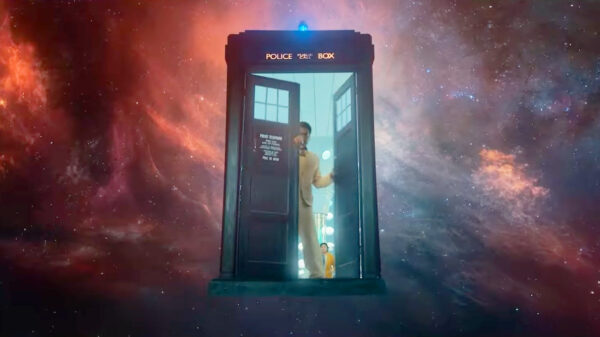
 Doctor Who has always been something of a cultural paradox. It’s a British institution that somehow became a global phenomenon, yet in recent years the show has struggled to maintain the international momentum it built during the Matt Smith and Peter Capaldi eras. With Disney+ now involved in distribution and Russell T Davies back at the helm, there’s renewed conversation about whether the Time Lord can recapture that worldwide appeal. The question isn’t just about viewing figures, though. It’s about whether the show can balance its distinctly British identity with the expectations of a streaming-era audience that has fundamentally different viewing habits than the Saturday teatime crowd of decades past.
The Streaming Era Changes Everything
Traditional broadcast television operated on loyalty and routine. You tuned in weekly because that’s when the show aired, and missing an episode meant waiting for a repeat or hoping someone recorded it. Streaming platforms have demolished that model entirely. Now viewers expect entire seasons available at once, production values that rival cinema and narratives that reward binge-watching rather than episodic patience.
This shift affects different shows in different ways. Procedural dramas can struggle because their episodic nature feels outdated when you can watch serialised storytelling unfold across eight hours in a single sitting. Doctor Who sits awkwardly between these formats. It’s built on standalone adventures but increasingly relies on season-long arcs and mythology that casual viewers find impenetrable. Matthew Vanzetti has explored similar challenges in entertainment analysis, particularly how legacy franchises adapt to changing audience expectations without losing their core identity.
The production schedule presents another hurdle. American streaming shows often drop entire seasons simultaneously or follow tight weekly release patterns with minimal breaks. Doctor Who’s traditional model involves shorter seasons, occasional specials and sometimes lengthy gaps between series. That worked fine when it was appointment television. In a streaming landscape where momentum matters enormously, those gaps can be fatal to sustained interest.
The International Appeal Puzzle
What made Doctor Who click internationally during its peak years? Part of it was timing. The show’s 2005 revival coincided with a golden age of genre television when audiences were hungry for imaginative sci-fi that didn’t take itself too seriously. Shows like Buffy and Firefly had proven that wit and heart could coexist with fantastical premises. Doctor Who offered that same blend but with a uniquely British sensibility that felt refreshing rather than derivative.
The casting of Matt Smith proved particularly significant for American audiences. His Doctor was alien enough to feel genuinely otherworldly but accessible enough to anchor emotional storylines. The Amy Pond era delivered consistently strong writing that balanced standalone episodes with compelling character development. You didn’t need decades of lore to enjoy “Vincent and the Doctor” or “The Girl Who Waited”, but long-time fans found plenty of deeper references to appreciate.
Recent series have struggled to replicate that balance. The Thirteenth Doctor era introduced important representation but often felt like it was lecturing rather than entertaining. That’s not a political statement about the show’s values. It’s an observation about craft. The best Doctor Who episodes have always smuggled progressive ideas inside cracking good stories. When the message becomes more prominent than the narrative, viewers switch off regardless of whether they agree with the sentiment.
Production Values and Competition
Budget constraints have always shaped Doctor Who’s aesthetic. The wobbly sets and questionable special effects became part of its charm, a reminder that imagination matters more than polish. That worked when the show competed primarily with other British dramas and the occasional imported American series. Now it’s competing with The Mandalorian, Stranger Things and House of the Dragon. Shows with budgets that dwarf what Doctor Who receives, even with Disney’s involvement.
The Disney partnership should theoretically help. More money means better effects, more ambitious set pieces and potentially higher-profile guest stars. But there’s a risk too. If Doctor Who starts looking like every other big-budget streaming show, does it lose the scrappy inventiveness that made it special? The show’s greatest episodes often succeeded despite their limitations, not because of unlimited resources. “Blink” remains a masterclass in tension and storytelling, achieved largely through clever writing rather than expensive effects.
International audiences have also become more sophisticated about production quality. They’ll forgive lower budgets if the storytelling compensates, but they won’t tolerate both mediocre effects and weak scripts. Doctor Who needs to decide whether it’s competing on spectacle or leaning into its strengths as a character-driven, ideas-focused show that happens to involve time travel and aliens.
Finding the Path Forward
Winning back a global audience requires understanding what was lost and why it mattered. The show needs stories that work as standalone adventures while building towards something larger. It needs characters viewers genuinely care about, not just representatives of demographic groups. It needs to trust its audience’s intelligence without becoming inaccessible to newcomers.
Russell T Davies’ return offers genuine hope. His first era demonstrated exactly this balance, delivering populist entertainment that never felt dumbed down. Whether he can recreate that magic in a vastly different media landscape remains to be seen. The tools are there, the platform exists and there’s clearly still affection for the show globally. What’s needed now is consistency, confidence and stories that remind people why they fell in love with a mad alien in a blue box in the first place.