
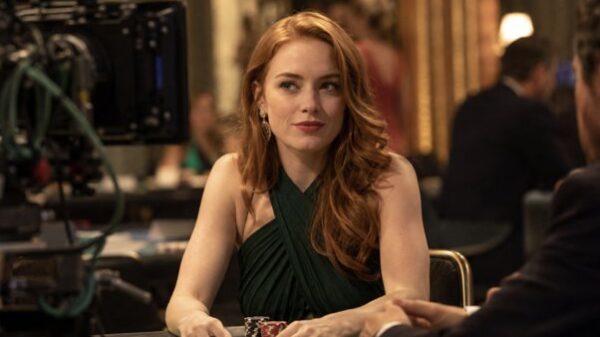
A poker table needs very little furniture to become dramatic. Cards. Chips. Faces that refuse to move. Casino floors work differently: noise, mirrors, carpets, lights, everyone pretending the room is under control. That contrast explains why film keeps returning to gambling spaces. Modern tools such as 1xbet android belong to real-life experiences, but cinema’s gambling language was built in physical rooms first. The table gives the close-up. The casino floor gives the maze. Between them, directors get tension without needing to explain much.
The poker table makes silence loud
Rounders remains the cleanest modern poker example because the table is not just a setting. It is where character becomes visible.
The film places Mike McDermott inside a high-stakes poker setting, but the gist is not only in the cards. It is in the waiting. A glance held too long. A bet placed too calmly. A pause that makes the room lean forward.
That is why poker works so well on screen. It narrows the frame. Dialogue can slow down because the game is already speaking. The viewer watches faces the way other players watch hands.
Backroom poker scenes also give filmmakers a natural hierarchy. Some players talk. Some listen. The strongest person at the table is not always the loudest one. That small reversal keeps the table alive.
Casino floors move like machines
Casino films widen the frame. The floor is not intimate. It is designed to overwhelm.
Casino uses the gaming floor as a system of movement and control. The camera glides through tables, money rooms and back corridors as if the building itself has a pulse. The story is not only about who sits at the table. It is about who understands the room.
Queen of Diamonds takes a quieter route. Its blackjack sequences stretch time until routine becomes the point. The dealer’s space is repetitive, bright and almost numb. No grand speech needed. The room tells the viewer what kind of life is being shown.
That is the difference between a poker table and a casino floor. One compresses attention. The other swallows it.
Different rooms, different story functions
Film gambling spaces tend to carry a clear dramatic job. The setting tells the viewer what kind of tension is coming before the scene fully begins.
| Film | Main gambling space | Story function |
| Rounders | Poker table | Character expression through silence |
| Casino | Casino floor | Power shown through movement and design |
| Queen of Diamonds | Blackjack table | Repetition and distance |
| Hard Eight | Casino interiors | Routine, timing and quiet calculation |
| The Cooler | Old-style casino floor | Myth, luck and fading ritual |
| Ocean’s Eleven | Casino complex | Ensemble timing across one designed space |
The pattern is easy to miss because the settings look familiar. Tables, dealers, chips, corridors. Yet each film bends the same objects toward a different tone.
Heist structure turns the floor into a map
Ocean’s Eleven treats the casino less like a gambling room and more like a machine with moving parts. The story revolves around a coordinated plan involving three casino properties linked to one target space. The pleasure of the film comes from watching timing become architecture.
That is a different use of casino storytelling. The table is not the centre. The floor plan is. Elevators, staff routes, cameras and timing windows become part of the rhythm.
The film works because the casino feels legible and impossible at the same time. Viewers understand the broad layout, but the details keep multiplying. Every corridor suggests another rule.
Why filmmakers keep returning to these rooms
Poker tables and casino floors save screen time. They bring status and uncertainty into one image. A character sitting down at a table has already entered a test. A character walking across a casino floor has entered a room built to watch them back.
The best films do not treat gambling spaces as decoration. They use them as ways of expression. Rounders finds tension in stillness. Casino finds it in excess. Hard Eight finds it in routine.
That range explains the lasting pull. A card table can hold an entire relationship in one hand. A casino floor can make a character look powerful one moment and small the next.
In iconic film storytelling, gambling spaces are rarely just about the game. They are about control, performance and what happens when the room knows more than the person standing in it.