
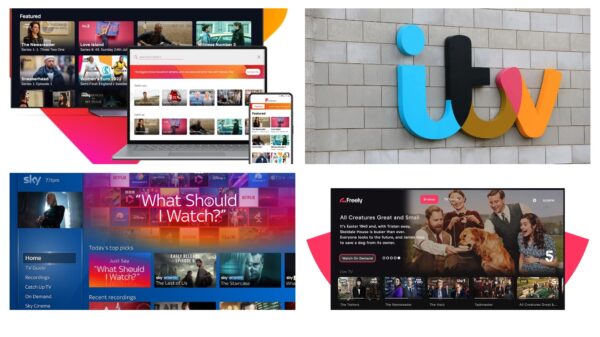
UK broadcast television is facing structural change — here’s the latest
While the future of the TV licence continues to be a topic of great interest to the BBC (and something we’ve not covered for a while), let’s not forget ITV. Then there’s the means by which we access television. Here’s some recent news you should be aware of.
Recent changes in UK broadcast television
Before we go further, it’s important to understand:
While these changes are likely to be far reaching and drive other change, little is changing in the short term
We’ll start with the most recent topic, then one with wider impact.
Sky purchases ITV
Here’s the Sky announcement, from which we’ve taken:
ITV has agreed a £1.6bn deal with Sky, the owner of Sky News, for its media and entertainment arm following months of talks.
The agreement, subject to shareholder and regulatory approval, will create the UK’s largest commercial broadcaster via the acquisition of the ITVX platform and ITV’s free-to-air channels, but not ITV’s studio operations.
The article covers a few things, but note ITV Studios is not in the deal. In fact:
The Sky-owned Love Productions, which makes the Great British Bake Off, is being sold to ITV for £200m to enhance “creative capabilities and portfolio breadth”
The BBC has some less partial analysis, focusing on which shows might be under threat. It stresses there are several years’ commitment, talks Coronation Street and reminds us Sky is American, owned by Comcast.
Freeview is getting switched off, welcome to Freely
You may well have seen adverts for a particular brand of TV in the build-up to the World Cup promising broadcast TV without an aerial. What you may not know is the government is currently consulting on switching off Freeview. You can read the details (there’s a lot) here, but in summary it clearly sets out the threat to Public Services Media (BBC, ITV, Channel 4, STV and S4C) from streaming (not just the big streamers, but also YouTube (and other options emerging). It asks a whole bunch of questions (and you can take part), but key for this post is:
Chapter 3.1 of the green paper outlines the government’s preference for an IPTV transition from either 2034 or 2044.
This is government speak for “switch off Freeview and deliver through Freely only”. It’s based on a mix of trends, increased internet connectivity at scale and more. Here it’s worth some obvious remarks:
— this means viewers will need good internet access
— some groups can’t afford this
— rural communities can’t all get good internet access (yes, it’s improving)
— transmitters would switch off, their last users will tend to be those in rural communities or unable (unwilling) to change.
What if you don’t want a particularly brand of TV
It’s less advertised, but you can get Freely set-top boxes from several places. We’ve used Freely via a box to watch the World Cup, and the services is fine.
Why can’t the transmitters keep going
At some point the cost to run for the volume of users will become prohibitive. It is worth reading proposal from Arqiva (who run the transmitters) have this response to the green paper, which suggests there is:
a practical, fully-costed and evidence-based proposal for a managed and phased transition to 2044 that maintains the benefits of broadcast while enabling continued innovation through internet-delivered services.
One last thought
As we said at the top, changes are coming, but not tomorrow (or even next month). Medium to long term it’s clear ITV will look different to today. As to the switch-off, government has a history of ambition not matched by outcome (for any number of reasons — it’s an observation). We suspect the later date for cutting across services will have merits, but will leave a two-tier market as Freely (and other internet TV services) become the platform of preference for UK viewers. We also wonder what other European changes might happen across broadcasters to offer new services further increasing the attraction of streamed TV.
We’ll do our best to report, explain and explore.