
Key Takeaways
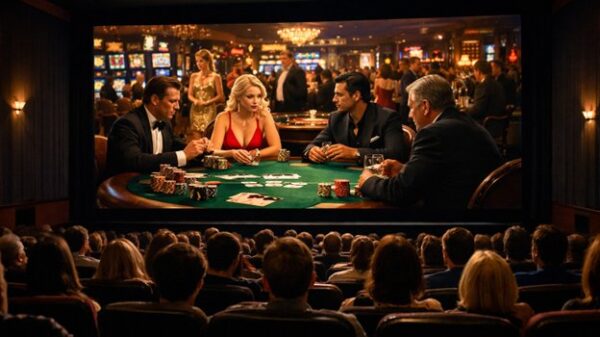
- Western cinema presents casino gaming as elegant, ritualized performance.
- Beneath that style, casino play often works like a sport.
- Roulette shows how pressure, pacing, and composure drive competition.
- Casino scenes last because they blend beauty with live tension.
Icons like Robert Altman, Martin Scorsese and a few others have created great movies featuring casino games, and western cinema keeps returning to the casino because it offers something few settings can match: pure pressure wrapped in beauty. That is why casino scenes so often arrive with a sense of ritual. Even when the plot is moving fast, casino play is often shown as something elegant and almost sculpted, a form of taste under pressure. The audience is invited to admire composure as much as outcome.
But that reading only tells half the story. Under the polish, casino gaming often works less like art and more like sport. It runs on repeated contests, visible nerves, stamina, discipline, pacing, and the ability to stay sharp over time.
The Wheel as a Competitive Arena
Roulette is one of cinema’s favorite casino images because it is easy to film and easy to feel. The wheel gives directors shape, motion, and suspense in one object. Yet roulette is not only a visual symbol. It is also one of the clearest examples of how casino play can behave like sport, especially since the emergence of online casino platforms. So what has changed?
Before, physical casinos may have kept this game as a symbol of their establishments. Digital platforms, however, changed its status. First, they democratized the game by giving many more people access to it. Then, with the adoption of cryptocurrencies, they truly increased the competitiveness of the game. People who did not trust traditional banking, or strongly disliked how slow it was, took advantage of offers like Bitcoin casino roulette, or roulette with any other currency. This gave a huge boost to the competitive nature of the game.
What makes roulette so compelling is the structure around the spin. Players choose:
- how much ground they want to cover
- how narrow or broad their position will be
- how they want to pace risk across a session
That creates a style of play. Cinema often treats the wheel as a symbol of fate, but in practice it is also a repeated test of composure.
In crypto-based games, the wheel itself remains the classic center of attention, yet the wider environment becomes faster and more competitive. Crypto payment rails shorten the gap between decision and action, while access becomes more fluid across borders and time zones. And again, this practicality is what made the nature of the game closer to sports, where winning is more important than just the participation, or as Didi Hamann, the renown athlete says:
Please, embed the link:
https://www.instagram.com/p/DU_ufFujFl1/
Why Film Turns the Casino Floor Into Performance Space
Cinema makes casino gaming look artistic because it borrows the language of performance. A roulette table is framed the way a director might frame a dancer, a boxer, or a solo musician. The body matters. Timing matters. Silence matters. What looks graceful on screen is often a carefully staged form of concentration.

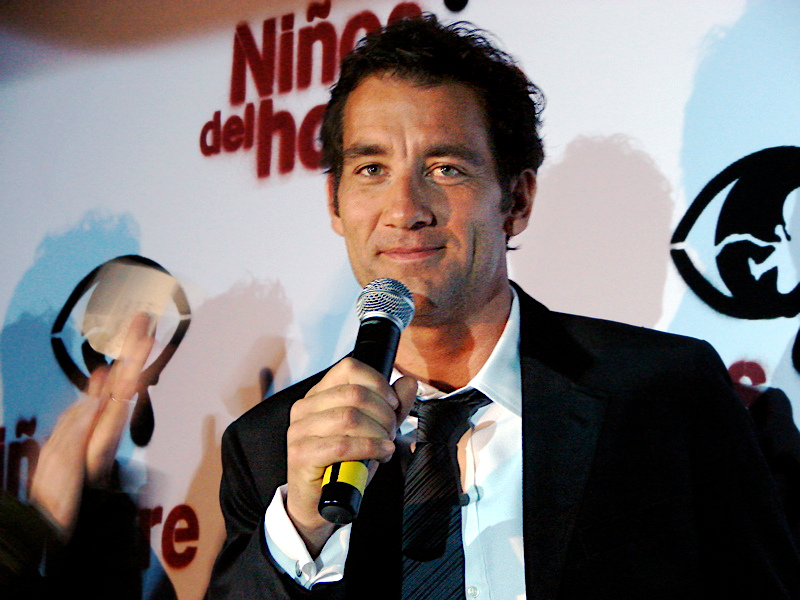
Croupier (1998), where Clive Owen was the lead actor, was one of the movies that portrayed gambling like a ceremonial system with rules, repetition, distance, and fate. Image: Here
That also helps explain why casino scenes are easy for many people to enjoy today. A lot of people are already used to watching live competition, especially in sports. In November 2025, Nielsen said that sports made up only 3% of broadcast content by length, but got 37% of all broadcast viewing. Other findings state that 25% of live-stream viewers watch official live events like sports, and 20% like live streams because of the real-time interaction.
These numbers show something simple: people really like live tension. They enjoy watching things unfold in the moment, with uncertainty, rhythm, and other people reacting too. That is one reason casino scenes work so well. They use that same feeling of waiting, suspense, and crowd energy.
| On-screen choice | Why it feels like art | The sport-like function underneath |
| Slow camera moves around the table | It turns the room into choreography | It maps the field before the contest begins |
| Close-ups of hands, chips, and faces | It makes play look crafted and intimate | It highlights technique, commitment, and nerve |
| Pauses before the result | It creates dramatic form and tension | It mirrors pre-shot or pre-serve anticipation |
| Crowd reaction after a spin | It gives the scene emotional lift | It works like live spectators responding to a decisive play |
Seen this way, the casino in film is not misread as art by accident. It is filmed as art because art is the best way to package pressure for the eye. But the action inside the frame still runs on sporting logic. There is repetition, adaptation, recovery, and the constant demand to perform under observation.
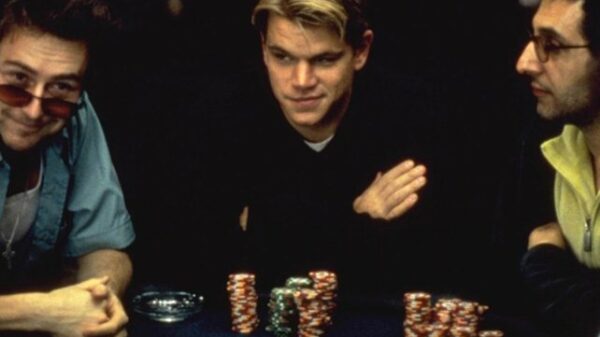
Rounders (1998), unlike Croupier, showed the tough and “sporty” side of gambling.
The Sporting Lens Explains Why Casino Stories Still Work
Looking at casino play through a sporting lens also helps explain why these stories remain current. Modern casino activity is no longer tied to one glamorous room. It moves across screens, time zones, and formats, which makes the idea of casino gaming as repeat performance even more useful.
Film scholars have noticed that cinema does not simply show casino play as random motion. It gives it a performance ethic. In a study of 72 scenes from 28 mainstream fiction films, Michael Egerer and Varpu Rantala concluded that “the theme of self-control and competence was identified as being central to gambling’s appeal.” That line matters because it gets to the heart of why casino scenes feel so durable on screen.
Why the action still feels athletic
Western cinema may dress casino gaming in glamour, but it keeps returning to discipline, poise, and competitive identity. Those are sporting values, even when they are wrapped in velvet, mirrors, and soft light.
The real strength of casino cinema, then, is not that it chooses between art and sport. It fuses them. It gives us the beauty of performance and the pressure of the contest at the same time.
Style and competition work best together
Western cinema romanticizes casino gaming because the image is rich, but the action endures because the structure feels athletic. The casino scene works best when it lets style and competition share the same frame.