
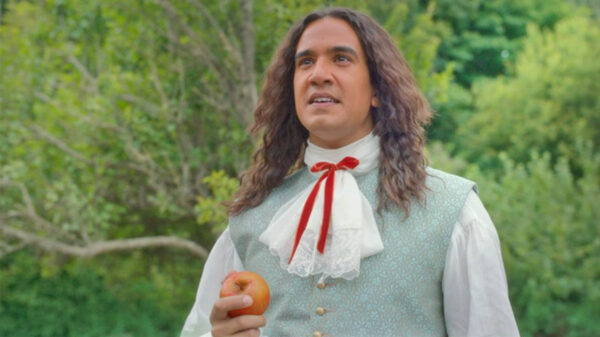
A BBC-commissioned study, Independent Thematic Review of Portrayal and Representation of the UK in BBC Content, conducted by former BAFTA chair Anne Morrison and ex-Ofcom executive Chris Banatvala, referred to audience complaints about the casting of Nathaniel Curtis as Sir Isaac Newton in the Doctor Who 60th anniversary special Wild Blue Yonder.
The 80-page report acknowledged that “colour-blind” casting could be considered “clunky” in some cases.
“As in all organisations, assessing progress requires regular measurement. The BBC does measure diversity in its content with the aim of portraying and representing the UK. However, this is currently done largely at programme level. As a result, this can sometimes lead to a sense that there needs to be a smattering of diversity in every programme which can lead to inauthentic portrayal. In some cases, this can look clunky, particularly in scripted programmes. We think that the BBC should measure its success in diversity at genre and not programme level to avoid this. While the BBC must accurately reflect UK society overall, this would ensure it had creative freedom to make programmes where the diversity is organic, natural and arises from its location and context.”
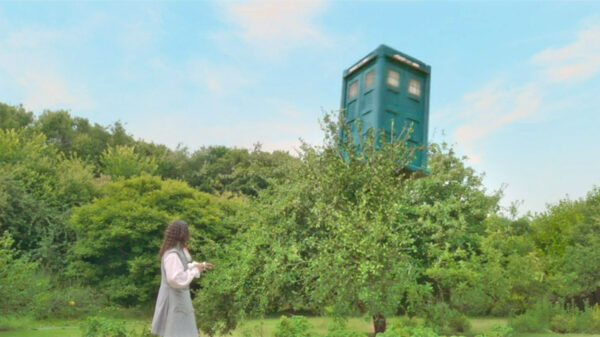
The report cited viewer complaints in regard to Doctor Who.
“Colour-blind casting in drama is still controversial among some commentators and some audience complaints on this topic were received during the review year about Doctor Who…”
“The controversy over Doctor Who concerned a mixed race (Indian/white) actor, Nathaniel Curtis, playing the part of Sir Isaac Newton, a white historical figure. Some complainants argued that it would cause offence if a white person were to portray a black historical figure and it is certainly hard to imagine a modern equivalent to Sir Lawrence Olivier ‘blacking up’ to play Othello.”
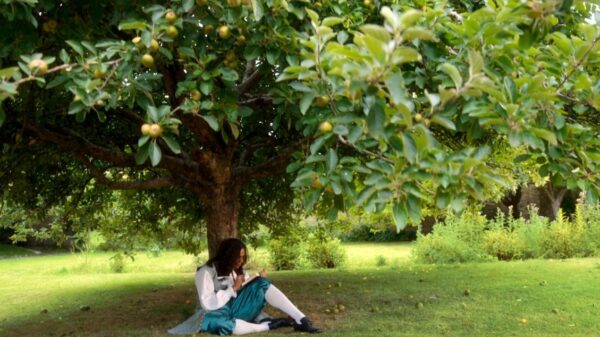
The report was nevertheless measured in its response to complaints about casting Curtis as Sir Isaac Newton, citing the fantasy element in Doctor Who as a reason unconventional casting could be considered acceptable.
“However, without colour-blind casting, the range of roles available to actors of colour would be severely restricted, in a way which would not be the case for white actors, so we find this a false equivalence. In period drama, the controversy tends to be related to whether the series wants to be taken seriously as historically accurate, or whether we are in the world of fantasy (e.g., Bridgerton on Netflix). Also, people sometimes assume that the history of the British Isles was entirely white, without recognising that some degree of ethnic mix has always existed. In Doctor Who, if we can ask viewers to believe that the central character is an extra-terrestrial being who can regenerate into a range of different actors and travels in a time machine through the space-time continuum, a mixed-race Sir Isaac Newton seems much less of a stretch.”
Ultimately, the study underscores a nuanced perspective on representation: while colour-blind casting can feel natural and acceptable in the fantastical, time-bending world of Doctor Who, it risks coming across as forced or “clunky” in more grounded scripted dramas — suggesting that thoughtful, context-sensitive approaches to diversity remain essential to maintaining audience trust and storytelling integrity.